
QUICK SEARCH
Enter Keyword:


Calendar of World Photographic Events
The Freestyle Retail Store

Our Policies
Order Policy
Privacy Policy
No Risk Guarantee

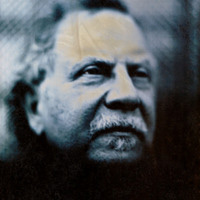
Robert Hirsch
Member, Freestyle Advisory Board of Photographic Professionals

Click to enlarge Mr. Hirsh's photo samples:
Articles
As featured in our Winter 2004 Catalog... My Favorite Filter... Circular Polarizing Filter
Polarizers are used to eliminate reflections from smooth, nonmetallic, polished surfaces, such as glass, tile, tabletops, and water, and they can improve the color saturation by screening out the polarized part of the glare. This can make a clear blue sky appear deeper and richer and have more contrast without altering the overall color balance of the scene. The increase in saturation results from a decrease in surface glare. Since most ... full article


Biography

Robert Hirsch is an artist, curator, educator, historian and author of Seizing the Light: A History of Photography; Exploring Color Photography: From the Darkroom to the Digital Studio published by McGraw-Hill and Photographic Possibilities: The Expressive Use of Ideas, Materials, and Processes published by Focal Press. His next book, Light and Lens: Photography in the Digital Age, is due this Fall.

Hirsch has been a contributing writer for Afterimage, Buffalo Spree, CEPA Journal, Contact Sheet, Digital Camera, exposure, The Focal Encyclopedia of Photography, Fotophile, FY, History of Photography, The Photo Review, Photovision, and World Book Encyclopedia.

Hirsch's visual work has recently been shown at: Center for Photography at Woodstock, NY; the Thompson Art Gallery at San Jose State University; Brooklyn Arts Council; Amarillo Museum of Art; New Jersey City University; CEPA Gallery; Light Work; South East Center of Contemporary Art; University of Northern Iowa; Parsons School of Design; Wichita Falls Museum & Art Center; Big Orbit Gallery; University of New Mexico; Vermont Center for Photography; Artspace; Corcoran Gallery of Art; George Eastman House; Williamsburg Art & Historical Center; University of the Arts; Albright-Knox Art Gallery; Contemporary Museum; and Stefan Stux Gallery.

Upcoming exhibitions are scheduled at The Light Factory, Charlotte, NC, the Noorderlicht Photofestival, Groningen, Holland, the Martin Museum of Art at Baylor University, and Burchfield-Penney Art Center in Buffalo.

Hirsch is the former Executive Director and Chief Curator of CEPA Gallery, Buffalo, NY and has curated numerous solo and group exhibitions. He currently serves on National Advisory Boards of CEPA and Freestyle Photographic among others.

His projects can be viewed at: www.lightresearch.net/


Exhibits

Artifacts of Remembrance

July 26 - October 11, 2007

Artifacts of Remembrance illustrates the physical remains and evidence of tragedy created by natural disasters and human made disasters. Each artifact is captured as a specimen to answer "how did this happen," and "why did we allow this to happen." Artifacts of Remembrance features the photographic pictorial sculpture World in a Jar by Robert Hirsch (relief front), in addition to the photographic collage of Tea Jobon, video installation by Daniel Kariko and new work by Chris Sullivan.

For more info call 704 333 9755 or log onto www.lightfactory.org.

Exhibition Postcard PDF


Interviews

Q. What made you decide to write your first text book?
A. I want to stimulate students. Get them thinking - to come up with their own ideas. I was frustrated by the dearth of good photography texts that existed at the time. Photograph books as a group fell into... full article


Website

For more information on Robert, visit his website at http://www.lightresearch.net


Ask the Experts

To ask Mr. Hirsch a question please fill out the form below. The most popular questions and answers will be posted on this page.

Name:
Email:
Question:
In the box below, please enter the numbers and letters seen in the graphic.


Ask the Expert Question/Answer

QUESTION:

I need to defend my creditability for teaching a 300 level History of Photography Course. The course was written by the first Photography instructor at our university who is long since gone. Now there is one person creating a hubbub that the instructor should have a terminal degree in Art History instead of a MFA in Photography. Do you have access to any statistics concerning the degrees held by History of Photography instructors in other University / College Photography programs? As you might imagine one problem would be finding an Art History Instructor with a doctorate in the history of photography. Any help and even your opinion would be greatly appreciated. You were most helpful with an earlier question about digital photography. I respect your opinion and appreciate your time and willingness to be of help. I am currently teaching Color Photography with your latest edition of "Exploring Color Photography" and am quite happy with the digital additions. Sincerely, Jayne

MR. HIRSCH'S ANSWER:

Dear Jayne, You have my deepest sympathy. In a perfect world what would be important is an individual's knowledge, their ability to communicate it and to get students excited about the history of photography. Unfortunately you are caught up in a o...full answer

QUESTION:

Hi, I've read that every photographer from beginner to pro should at least have in their filter collection a Polarizer,UV & ND filter. I have the Polarizer & UV but no ND. I know that there are different ranges of ND's but I don't know which one I should get. If I had to chose one to start with, What # would you recommend I get? I am using a Nikon FG camera which has a TTL metering system. Thank you! Louis

MR. HIRSCH'S ANSWER:

Dear Louis, UV filter - definitely, Polarizer - yes, ND - depends. Tell me why you think you need one. ND filters are used to reduce the overall intensity of the light. They are available in different densities - ND 2, 4, and 8. Typically...full answer

QUESTION:

I am teaching a class on the history of photography (using your Seizing the Light book), and I was wondering if you have any tips on how to create an exciting environment about photography while still learning the facts involved and being able to identify important people. This class will be offered online adn in the classroom. Thanks! Tamala

MR. HIRSCH'S ANSWER:

Dear Tamala, I know of no magic bullet for getting students excited about any course except teacher enthusiasm and knowledge of the subject. If you are jazzed about what you are doing then it increases the likelihood that some of the students will...full answer

QUESTION:
I read somewhere that if I use tungsten balanced film outdoors without any filters, I will get a technicolor effect. Is this true? I will be travelling through former Yugoslavia for a month, and that is the look I'd like to get. Are there other ways to do this (other than digital)?

MR. HIRSCH'S ANSWER:
I don't exactly know what you mean by Techicolor, but the mismatch in color (Kelvin) temperature between the film and the light source will produce unrealistic results. Using tungsten film (balanced for 3200K) in daylight produces a blue cast....full article


 Home | Contact Us | Information | Catalogs | Teachers Lounge | Video Tech Tips | Careers | Privacy Policy