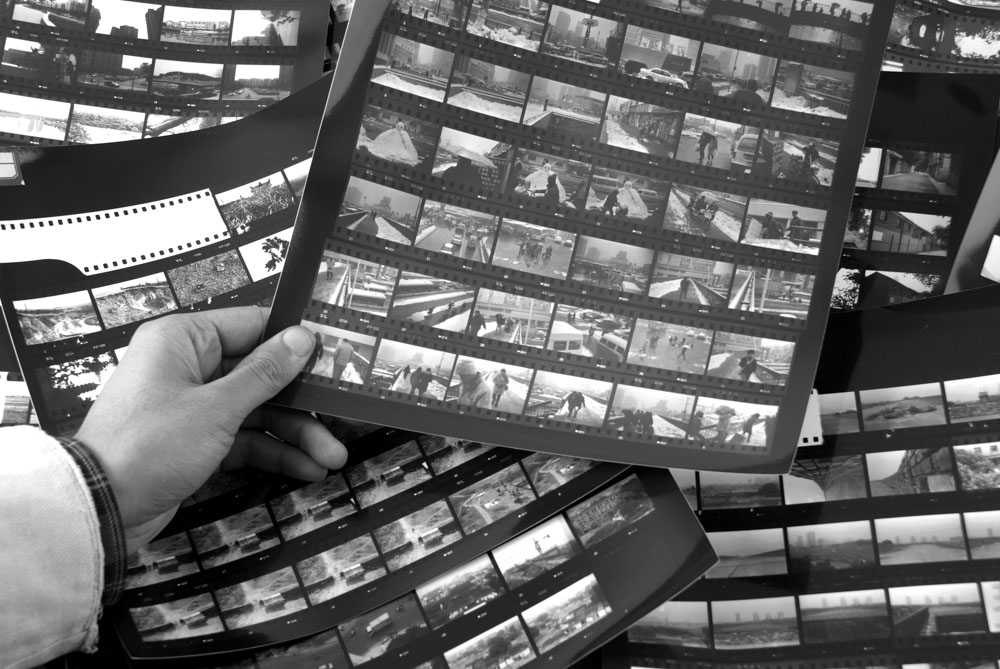
One of the joys of traditional darkroom photography is the vast number of arcane
and sometimes obscure processing methods for making imagery that goes far beyond the digital realm...and sometimes beyond the realm of black and white as well! Some people think that "traditional" means relegating one's pictures to "straight" black and white. Not true! Alternative processes can produce images that by their unique nature, made with special combinations of exposures, papers, films and chemicals, digital cannot touch. But these processes do more than simply deliver images that can't be found on a computer printer. Some reach back through the decades, all the way back to the beginnings of what we today consider to be modern photography. Others jump completely outside of the boundaries of contemporary photographic sensibilities. Still others are utilitarian, yet powerful when used wisely.
This section is devoted to unique processes that can only be found in the wet darkroom. We hope that the pieces collected here will help you find and expand your own creative vision, and appreciate the virtues of traditional photography as well.
|
Articles Featured in our Catalogs |
|
MOAB PAPERS
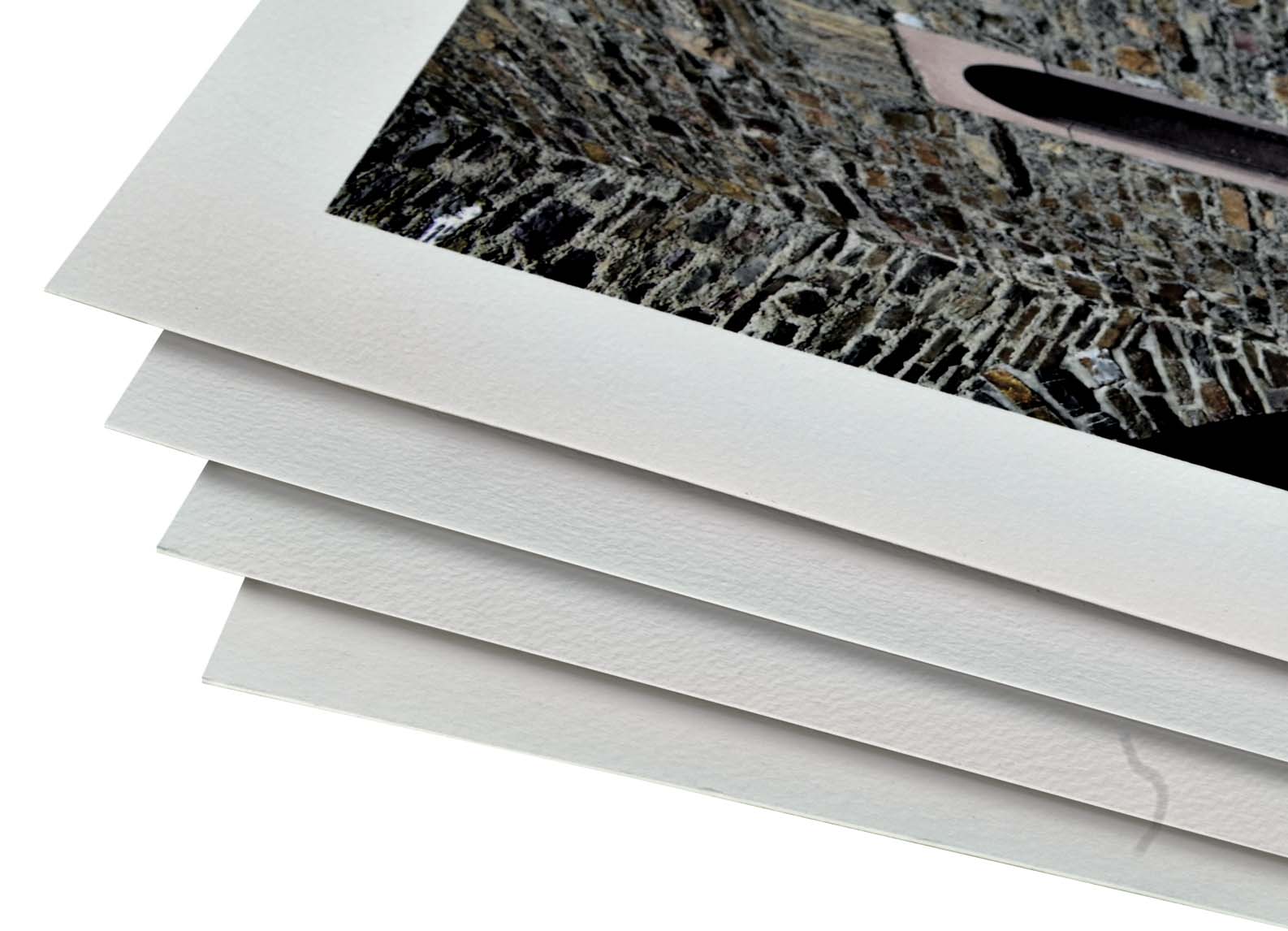
My choice of the Moab papers is the Entrada Rag Bright White. It has a smooth, toothy feel similar to a traditional hot press watercolor paper and it's made in the USA of 100% cotton that is acid free and lignin free.
|
|
|
QUICK AND EASY CHROMOSKEDASIC SABATIER
Chromoskedasic is a unique darkroom process that provides fun darkroom experimentation for those who like to put "play" back into the darkroom.
|
|
Jerry Burchfield
|
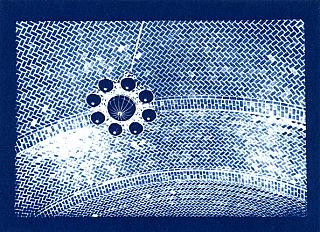
LUMEN PRINTS
Photograms are generally made in a darkroom directly from the objects themselves and their interaction with the basic elements that make photography possible: light, time, and light-sensitive materials. I think of it as taking Edward Weston's interest in photographing the thing itself to another level, instead of making a camera image of the subject, I made images directly with the subject to capture both its inner and its outer character.
|
|
|
PLATINUM/PALLADIUM OVER GOLD LEAF ON VELLUM
The combination of Platinum and Palladium over a Gold leaf results in an image that literally shines.
|
|
|
PHOTOGRAPHY AND ENCAUSTIC
The encaustic process when used in photography refers to applying hot beeswax over a photographic image. This wax can be pigmented with color or remain
white or creamy beige and it can give the image an intriguing surface and density.
|
|
|
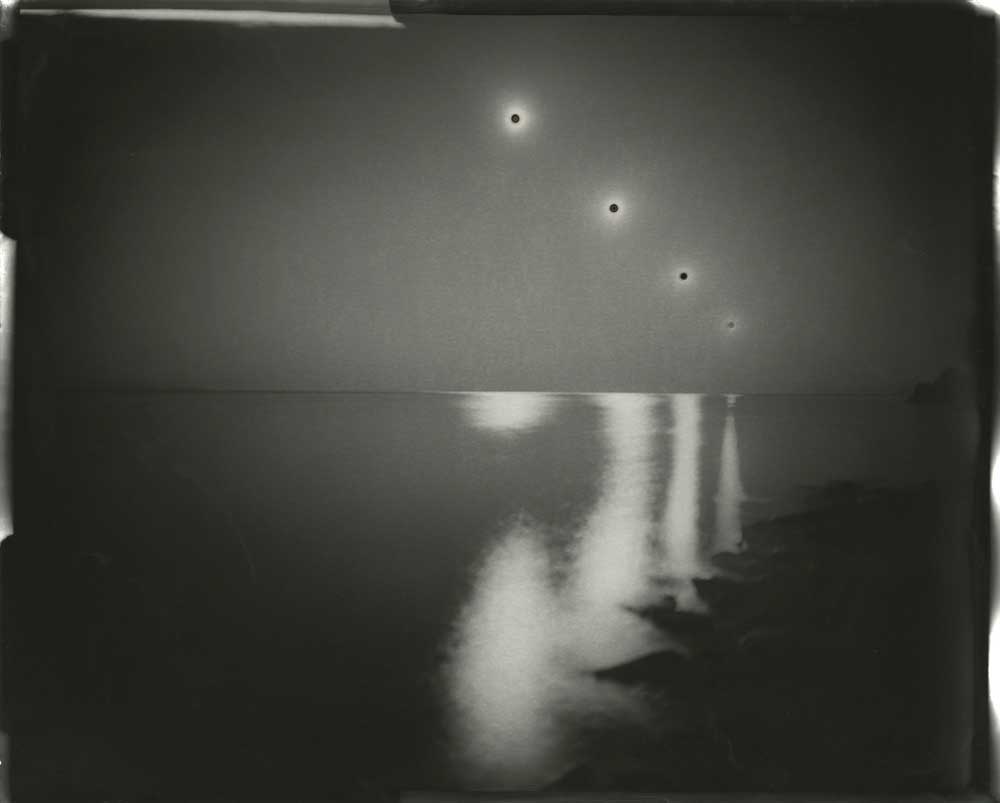
SUNBURNING
The silver rich papers partially print out during these long exposures, but are also developed and fixed thus creating unique prints that are attuned to reflect
the movements of our universe.
|
|
|
'PSEUDO-PLATINUM' PRINTING
I've long been a fan of the soft, warm 'feel' of platinum prints. I searched for a way to make prints with a similar look using an enlarger and
easily-accessible, normal darkroom materials. Enter Freestyle. (I've been shopping here since I was in high school photo classes... in the 70's!)
My combination of choice today is Foma 132 (or 133, 542, etc.) paper with Kodak Selectol-Soft developer.
|
|
|
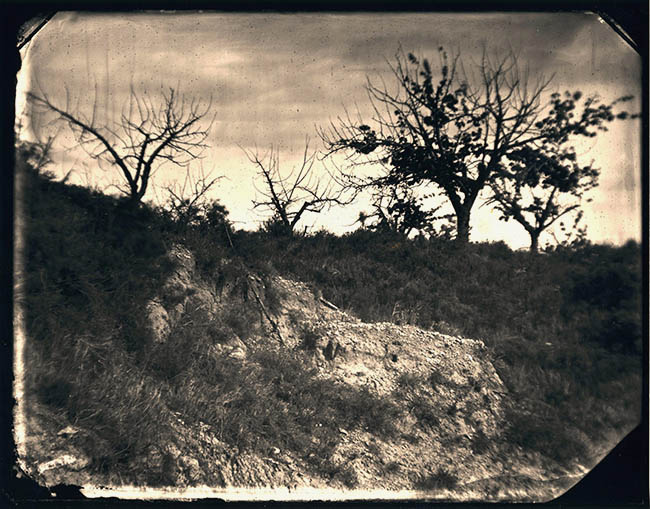
TINTYPES WITH HOLGA CAMERAS
People usually think of doing tintypes in large format cameras such as 4 x 5 or 8 x 10's, but for years I have been encouraging students to use any type of camera they have on hand. Brownies and pinhole cameras have been used as well as something that has become a favorite – the Holga.
|
|
|
KALLITYPE AND VANDYKE BROWNPRINT PROCESSES
Dr. W. W. J. Nichol invented the kallitype in 1899. The process is based on Sir John Herschel's iron-silver reduction process called the chrysotype (the modern process is
provided at the end of this section). This process is similar to platinum printing, except the kallitype image is made up of metallic silver instead of platinum.
|
|
|
SIMPLE CAMERAS CONNECT WITH THE ESSENCE OF PHOTOGRAPHY
In our high tech world toy and pinhole cameras remind us that a camera is just a light-tight box with a hole (aperture) at one end to admit light that strikes
some light-sensitive material opposite from the hole. Cameras define and shape an image, which make them a basic component of the photographic language. To limit
the choice of cameras is to reduce what one can photographically express.
|
|
|
WORKING WITH PYROGALLOL DEVELOPERS
Although pyrogallol (pyro) is the oldest b&w developer and was dominate in the 19th century, it was mostly ignored in the 20th century except for a few photographers mostly on the west coast.
|
|
|
MY RELATIONSHIP WITH THE HOLGA
Most thoughtful compositional decisions are made based on what elements to exclude from that frame. Using the Holga encourages this relationship between photographer and subject.
|
|
|
LIQUID EMULSION
...The ease of reproduction denies the possibility of producing a unique photographic object. Liquid emulsions allow artists using photography to combine lens-based media with expressive and gestural applications, the artist's distinct hand and mark-making becoming additional aesthetic components that supplement the mechanical ones.
|
|
|
THE MAGIC OF ILFOCHROME!
When I look at an Ilfochrome print, I get absorbed into the image. The image lives inside the material, not on it's surface. It
has a depth that just cannot be matched.
|
|
Mac McCowan
|
CARBRO PRINTING
Carbro prints are named because a bromide print is used, so if you want a 16x20 print you make a 16x20 print and put it in contact with a gelatin sheet that has been treated with potassium dichromate, potassium ferrocyanide, and potassium bromide.
|
|
|
MORDANÇAGE
In the world of photography, mordançage is a somewhat obscure process and often misunderstood. The draped veils even more confusing and often mistaken for Polaroid emulsion lifts or currently, Photoshop magic.
|
|
|
MAKING HOLGA PANORAMAS
At least in theory, making a photographic panorama is entirely straightforward: take a picture, pan the camera and make a second picture partially overlapping
the first, and so on as far around in any direction you please.
|
|
|
WORKING WITH HOLGA
Given that Ansel Adams was my first and only formal photography teacher, it's probably no surprise that most of my early photographs were large-format
sharply-focused B&W pictures of trees, rocks and water. Fact is, it took me years to realize that I don't even lead a fine-grained life - that while
Ansel's world was timeless, monumental and sharply defined, my own world is quirky, ephemeral and decidedly fuzzy around the edges.
|
|
|
THE LURE OF COLLODION
Collodion is to photography what watercolor is to painting -- fast, yet requiring exquisite manipulation. Each step of the process requires dexterity and quick decisions based on observation.
|
|
|
PLATINUM PRINTING
Most people think that printing platinum and palladium is done with precious metals, but actually we are nothing more than Iron printers. Iron salts in the emulsion coating of the paper form the light sensitive materials. Platinum replaces the iron during the processing of the print.
|
|
|
CONTRAST MASKING THE TRADITIONAL PRINT
By using various kinds of contrast masks, the traditional photographer can have far greater contrast control, from subtle to extreme, on his prints than merely using standard methods such as paper grade or developer changes.
|
|
|
KANCHI - ALTERNATIVE UNDERWATER PHOTOGRAPHY
It's a glorious day when the mind discovers something new. For over thirty years I've been doing sharp, toned, large format photographs of the landscape and still lifes. Then one day three years ago I found myself photographing underwater---a world where I had spent much of my youth, and a world most people will never experience.
|
|
|
THE POETRY OF INFRARED
Like so many other photographers that are addicted to seeing the invisible, that puffy tree flicked the switch in me, and for twenty-some years I've been inspired by the poetry of infrared light for all my personal work.
|
|
|
TONING BLACK AND WHITE PHOTOGRAPHS
There are two reasons for toning black and white photographs: to achieve greater longevity of the image by protecting or altering the silver in the emulsion of the print or to change the feeling of the photograph by modifying the print color.
|
|
|
THE LITTLE PLASTIC CAMERA THAT COULD
I find it hard to believe that a thirty dollar camera with a single plastic non-coated lens, actually a plastic magnifying glass, has had such an impact on my
students and me as a photographer. I am the product of a very rigid technical school, Brooks Institute of Photography; they beat all creativity out of me. Get
it right, get it sharp, get it in the camera the first time, that is how I produced most of my professional images, that is until the little camera that could.
|
|
|
HAHNEMÜHLE FINE ART PAPER
For more than fifteen years now, my inkjet paper of choice has remained Hahnemühle Photo Rag. I currently use Hahnemühle Photo Rag Bright White (308 gsm) for both my black & white and color printing needs.
|
|